
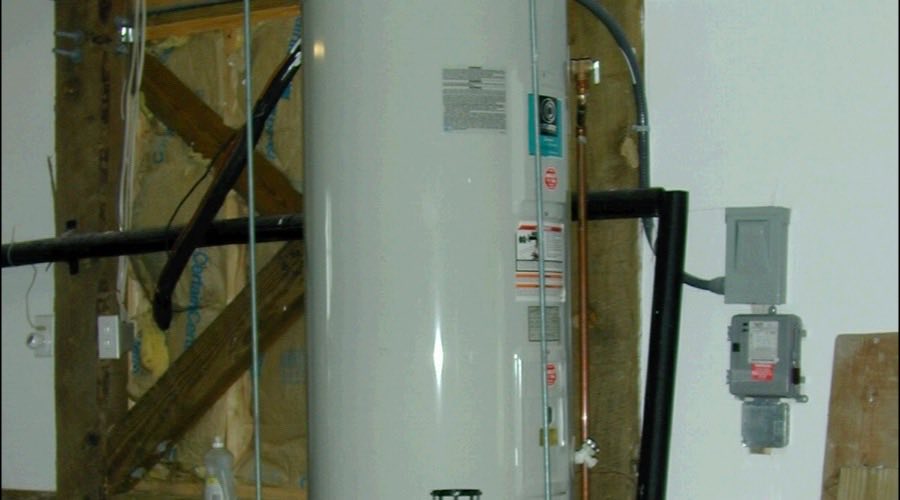
Water under the water heater is one of those sights that makes your stomach drop. The good news: most water heater leaks are either a cheap fitting or a tank that was near the end of its life anyway, and the first five minutes matter a lot more than the next five hours. Here’s exactly what to do, in order, and how to read the leak.
Step 1: Kill the Power or Gas
Do this before anything else. A tank that’s draining while it’s still heating can burn out electric elements or overheat a gas burner.
- Electric: flip the dedicated breaker for the water heater (usually a double-pole 30-amp) to OFF.
- Gas: turn the control knob on the gas valve at the bottom front of the tank to OFF (or Pilot), then close the gas shutoff valve — the handle on the gas line feeding the heater. Perpendicular to the pipe is closed.
If you smell gas, skip everything else, leave the house, and call your gas utility or 911 from outside.
Step 2: Shut Off the Cold Water Supply
Two pipes enter the top of the tank. The cold inlet has a shutoff valve — a lever or round handle. Close it. That stops the tank from refilling and feeding the leak. If the valve won’t turn or is missing, shut off the water to the whole house; our guide to finding and using your main water shutoff walks you through it.
Step 3: Contain the Water
Towels, a wet vac, a shallow pan. If the heater is in an attic — common in Houston — the concern is the ceiling below it. A code-compliant install has a drain pan with a line that runs outside; check whether that pan is full or overflowing. If water is already staining a ceiling, put a bucket under the wet spot and, if it’s bulging, poke a small hole to drain it in a controlled way rather than letting the drywall collapse.
Step 4: Figure Out Where It’s Coming From
Dry the tank off with a towel and watch for a minute. Where the water reappears tells you almost everything.
Leaking from the top
The hot and cold fittings, the T&P relief valve, or (on electric units) the upper element gasket. These are repairs, not replacements — a corroded nipple, a failed dielectric union, a flex connector that let go. Fixable the same visit.
Leaking from the T&P relief valve
That short pipe with a lever on the side or top of the tank is the temperature-and-pressure relief valve, and if it’s dripping or discharging, it’s telling you something: house water pressure is too high (Houston homes without a pressure-reducing valve often sit above 80 psi), there’s no expansion tank to absorb thermal expansion, the thermostat is too hot, or the valve itself has worn out. Don’t cap it — it’s the safety device that keeps a tank from rupturing. Have it diagnosed.
Leaking from the drain valve
The spigot near the bottom. Often it’s just loose or has a bit of sediment holding it open; sometimes the cheap plastic valve has cracked. Easy fix, but be honest about the tank’s age while you’re at it.
Leaking from the bottom of the tank
If the fittings up top are dry and water is coming from under the jacket or pooling in the pan, the inner steel tank has rusted through. There is no repair for this — tanks can’t be patched or welded — and it will only get worse, sometimes suddenly. This is a replacement. Houston’s hard water and a neglected anode rod are the usual culprits; see how Houston hard water damages your plumbing.
Condensation, not a leak
On a cold morning a gas heater can sweat when it first fires, and a nearby AC line or condensate drain can drip onto a tank. If the “leak” is a light film that dries up once the tank is hot, it’s probably condensation. Watch it for a day.
Is It an Emergency?
Call right away if water is flowing rather than dripping, the heater is in the attic or upstairs, the leak is from the tank body, or there’s any gas smell or scorching. It can wait for a scheduled visit if it’s a slow drip from a fitting or drain valve and you’ve shut the water off — you’ll be without hot water, but the house is safe. Hugo Plumbing answers 24/7 either way at (713) 409-7176, and what qualifies as a plumbing emergency has more on making the call.
Repair or Replace?
If the tank is under about 8 years old and leaking from a fitting or valve: repair. If it’s leaking from the tank body: replace, no matter the age. If it’s 10+ years old and leaking from anywhere, replacement is usually the better money even when a repair is possible — you’d be putting new parts on a tank that’s about to fail on its own schedule. Our full breakdown is in water heater repair vs. replacement, and current pricing context is in the water heater replacement cost guide. If you’re replacing anyway, it’s the right moment to consider going tankless.
How Hugo Plumbing Handles It
We come out for free, confirm where the leak is, and give you a written price for the repair — or for replacement options — before touching anything. Tank installs typically start around $2,500 depending on size, venting, and code items, and our $200 off high-efficiency water heater coupon applies. Every replacement gets a new pan, expansion tank where required, and proper venting so it passes inspection and doesn’t put you back here in three years. Details on the water heater repair and installation page.
Frequently Asked Questions
What should I do first if my water heater is leaking?
Turn off the power or gas to the heater first: for an electric unit switch off its breaker, for a gas unit turn the gas control knob to OFF or Pilot and close the gas shutoff valve on the supply line. Then close the cold-water supply valve on the pipe entering the top of the tank. Contain the water with towels or a wet vac, note where the leak is coming from, and call a plumber. Do not leave power or gas on a tank that is draining down; heating elements and burners can be damaged.
Is a leaking water heater an emergency?
It is if water is flowing rather than dripping, if the heater is in an attic or on a second floor, if the leak is coming from the bottom of the tank, or if you smell gas or see scorching. A slow drip from a top fitting or the drain valve with the water shut off can wait for a same-day or next-day appointment.
Can a leaking water heater be repaired or does it need to be replaced?
It depends on where the leak is. Leaks at the top inlet and outlet fittings, the temperature-and-pressure relief valve, the drain valve, or an element gasket on an electric unit are repairable. A leak from the tank itself, which shows up as water at the bottom of the unit or in the pan with no wet fittings above it, means the inner tank has corroded through and the heater must be replaced. Tanks cannot be patched.
Why is my water heater leaking from the relief valve?
The temperature-and-pressure (T&P) relief valve opens when pressure or temperature in the tank gets too high, so a discharging T&P valve is doing its job and warning you of a problem: excessive water pressure in the house (often above 80 psi), thermal expansion with no expansion tank, a thermostat set too high, or a valve that has simply worn out. It should be diagnosed rather than capped off. Never plug a T&P valve.
How long does a water heater last in Houston?
Tank water heaters in Houston typically last 8 to 12 years; hard water and high summer demand push many toward the shorter end. Tankless units last 20 years or more with annual descaling. If a tank is more than 10 years old and leaking from the tank body, replacement is the only option and usually the better investment even for a fitting leak.
If your water heater won’t hold, call Hugo.
Explore Our Plumbing Services
See all plumbing services, the areas we serve, or more plumbing tips.