
When a pipe bursts, a supply line lets go, or a fixture starts pouring water across the floor, one skill separates a quick cleanup from a five-figure disaster: knowing how to shut off your water main. In those first few minutes, every second of running water is more soaked drywall, more warped flooring, and more damage under your slab. The problem is that most homeowners have never located their shutoff valve — and a flooding kitchen is the worst possible time to go looking. Here’s how to find it, how to turn it off fast, and what to do next.
Why Every Houston Homeowner Should Know This
Water damage is one of the most expensive problems a home can face, and Houston homes are especially exposed. The vast majority sit on concrete slab foundations, so a supply-line failure can push water up through the slab and across your floors with nowhere to drain. Our shifting clay soil stresses pipes year-round, and every hard freeze — like the one that burst pipes across the region in 2021 — sends thousands of homeowners scrambling for a valve they’ve never touched.
Knowing where your shutoff is, and being confident you can close it in the dark with wet hands, turns a catastrophe into an inconvenience. It’s five minutes of preparation that can save you thousands.
The Two Shutoffs You Should Know
Every home has two ways to cut off the water, and it’s worth knowing both:
- The main house shutoff valve — controls water to your home only. This is the one you’ll reach for in almost every emergency and repair. It’s on your property, usually easy to reach, and doesn’t require special tools.
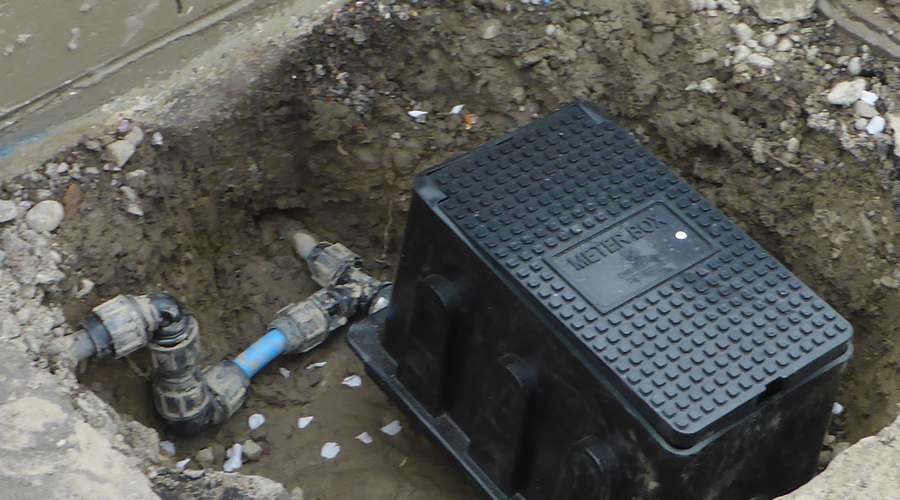
- The street-side meter valve — sits in the city meter box near the curb and shuts water off before it even reaches your house. Use it as a backup when you can’t find your house valve, or when the house valve is stuck or broken. It usually takes a meter key to operate.
Start with the house valve. Fall back to the meter if you need to.
How to Find Your Main Water Shutoff Valve
In Houston’s slab-built homes, the main shutoff is most often on an exterior wall near the front of the house, roughly where the water line enters from the street. Common spots to check:
- Near an outdoor hose bib (spigot) on the front or side of the house — the valve is frequently right beside where the line comes through the wall.
- By the garage, along the wall closest to the street.
- Near the water heater, if your home has an interior shutoff.
- In a ground-level box or lid close to the foundation on the street-facing side.
You’re looking for either a round wheel-shaped handle or a straight lever handle on the pipe. Find it today, while nothing is going wrong, and make sure everyone in the household knows where it is. Snap a photo on your phone so it’s easy to point out later.
How to Actually Turn the Water Off
Once you’ve found the valve, closing it is simple — but the two valve types work differently:
- Ball valve (lever handle). Give it a quarter turn until the lever sits crosswise to the pipe. When the handle is perpendicular to the pipe, the water is off. These are quick and reliable.
- Gate valve (round wheel). Turn it clockwise — righty-tighty — and keep turning. A gate valve takes several full rotations to close completely, so don’t stop until it won’t turn anymore.
If the valve is stuck, don’t force it so hard that you snap it — older gate valves can seize up and break, which turns one emergency into two. Gentle, steady pressure is best. If it won’t budge, move to the meter valve at the street instead.
Shutting Off at the Street: The Meter Valve
If your house valve is missing, stuck, or you simply can’t find it in time, head to the city water meter near the curb. In Houston it’s typically under a rectangular concrete or plastic lid at the edge of your property.
Lift the lid and you’ll see the meter and a shutoff valve on the street side of it. Most meter valves need a meter key (also called a curb key) — an inexpensive tool from any hardware store — to turn. Rotate the valve a quarter turn so it sits crosswise to the pipe, and the water is off. Keep a meter key with your emergency supplies; hunting for the right tool while water spreads is exactly the situation you’re trying to avoid.
What to Do Once the Water Is Off
Shutting the valve stops the flow, but a few quick steps limit the damage and make the repair easier:
- Open a low faucet to relieve pressure. Turn on a faucet on the lowest level of your home (or an outdoor spigot) to drain the water still sitting in the lines. This eases pressure at the leak and helps the dripping stop faster.
- Turn off your water heater if you’ve cut the supply for more than a few minutes — especially a tank unit — so it isn’t heating an empty or draining tank.
- Start cleanup right away. Mop up standing water, move valuables, and get air moving. On a slab, trapped moisture leads to mold quickly.
- Call a licensed plumber. A shutoff valve buys you time; it doesn’t fix the pipe. For a burst line, an overnight flood, or any plumbing emergency, get a pro on the way while the water is safely off.
If the failure was a burst pipe from a cold snap, our guide to frozen and burst pipes in Houston winters covers how to prevent the next one.
Find Your Valve Before You Need It
The single best thing you can do is locate and test your shutoff now, not during an emergency. Once a year, find the valve, close it, confirm the water actually stops at your faucets, then reopen it. This tells you the valve still works — seized or leaking valves are common in older Houston homes — and keeps the muscle memory fresh for everyone in the house.
While you’re at it, watch for signs of a bigger problem. If your water bill is climbing, you hear water running with everything off, or you notice damp or warm spots on the floor, you may have a hidden leak. Professional leak detection pinpoints it before it does real harm, and catching a slab leak early can save your foundation and your floors.
How Hugo Plumbing Can Help
At Hugo Plumbing, we’ve spent over 20 years helping Houston homeowners through exactly these moments — the 2 a.m. burst pipe, the flooded kitchen, the shutoff valve that won’t turn. If your valve is old, corroded, or hard to reach, we can replace it with a modern quarter-turn ball valve that’s easy to operate in a hurry. And when the worst happens, we’re available around the clock for emergency service, so you’re never facing a flood alone. Fast, honest help — right when you need it most.
Frequently Asked Questions
Which way do I turn the valve to shut off my water? Righty-tighty — turn the valve clockwise to shut the water off. If you have a lever-style ball valve, give it a quarter turn until the handle sits crosswise (perpendicular) to the pipe, which means it’s closed. A round wheel-style (gate) valve takes several full turns clockwise to close all the way.
Where is the main water shutoff valve in a Houston home? In most Houston homes built on a slab, the main shutoff is on an exterior wall near the front of the house, often close to an outdoor hose bib, by the garage, or where the water line enters. Some homes also have one inside near the water heater. If you can’t find one at the house, the city meter box at the curb always has a valve you can close.
What’s the difference between my house shutoff and the meter valve? The house shutoff controls water to your home only, and it’s the one to use for most emergencies and repairs. The meter valve, in the city box near the street, shuts water off at the source before it reaches your property. Use it when you can’t find or turn your house valve. The meter valve usually needs a meter key to operate.
Do I need a special tool to shut the water off at the meter? Usually, yes. The valve inside the city meter box is turned with an inexpensive meter key (or curb key) from any hardware store. In a pinch, a large adjustable wrench can work, but a meter key is safer and far easier. Keep one with your emergency supplies so you’re not hunting for tools while water is spreading.
Should I shut off my water when I leave town? Yes — it’s cheap insurance. Shutting off the main before a trip means that if a supply line, water heater, or washing-machine hose fails while you’re away, it can’t flood your home for days unnoticed. Just remember to switch your water heater off or to vacation mode if you cut its supply.
Know Where Your Valve Is
Call or text (713) 409-7176 for a free estimate and a written price.
A flooding home is chaos, but the fix often comes down to one calm, practiced move: walk to the valve and shut it off. Take five minutes this week to find your main shutoff, test it, and show your family where it is — it’s the cheapest insurance in plumbing. And when you need a valve replaced or an emergency handled fast, Hugo Plumbing has served Houston for over 20 years and is ready around the clock. If your drain won’t go, call Hugo.
Explore Our Plumbing Services
See all plumbing services, the areas we serve, or more plumbing tips.