
Your shower suddenly turns cold.
Or maybe the water still gets hot — just not as hot as it used to.
You walk into the garage and notice a small puddle around the water heater.
Now comes the question almost every homeowner eventually has to answer:
Do I repair the water heater or replace it?
The answer isn’t simply based on whether the unit still turns on.
A relatively young water heater with one failed component may have years of useful life left. An older tank with corrosion, sediment buildup, and recurring problems can turn repeated repairs into money spent delaying an inevitable replacement.
For Houston homeowners, there are a few things worth checking before making that decision.
Here’s how to tell whether your water heater probably needs a repair — or whether it’s time to start thinking about replacement.
Start With the Age of the Water Heater
Age isn’t everything, but it’s one of the first things we look at.
Traditional tank-style water heaters commonly last somewhere around 8 to 12 years, although actual lifespan varies significantly depending on:
- Water quality
- Installation
- Maintenance
- Household usage
- Tank condition
- Water pressure
- Sediment accumulation
Some units last longer.
Others fail much earlier.
The important point is that the same repair means something very different on a three-year-old water heater than it does on a twelve-year-old one.
If the unit is relatively young and otherwise healthy, repairing a failed component can make perfect sense.
If it’s approaching the end of its expected service life and has already needed several repairs, replacement becomes more attractive.
How Do I Find the Age of My Water Heater?
Look for the manufacturer’s data plate on the side of the tank.
You’ll normally find:
- Manufacturer
- Model number
- Serial number
- Tank capacity
- Fuel type
- Technical specifications
The manufacturing date may be printed directly on the label.
On some brands, however, the date is encoded into the serial number.
If you can’t determine the age, take a clear photo of the manufacturer’s label. A plumber can usually help identify it.
Knowing whether the unit is four years old or fourteen years old changes the repair conversation considerably.
Signs Your Water Heater May Only Need a Repair
Not every hot-water problem means you need a new water heater.
Several common failures can potentially be repaired.
No Hot Water
No hot water sounds catastrophic, but the cause may be a replaceable component.
Depending on whether the unit is gas or electric, possible problems include:
- Failed heating element
- Thermostat problem
- Ignition problem
- Burner issue
- Gas control problem
- Electrical problem
- Tripped breaker
- Failed safety component
If you’ve suddenly lost hot water, our Houston no-hot-water troubleshooting guide covers some basic checks you can make before calling a plumber.
Water Isn’t Hot Enough
If the water gets warm but never properly hot, the entire tank isn’t necessarily failing.
Possible causes include:
- Thermostat settings
- Heating element problems
- Burner issues
- Sediment buildup
- Mixing problems
- Increased household demand
Diagnosis matters.
Replacing an entire water heater because of a failed component doesn’t make sense.
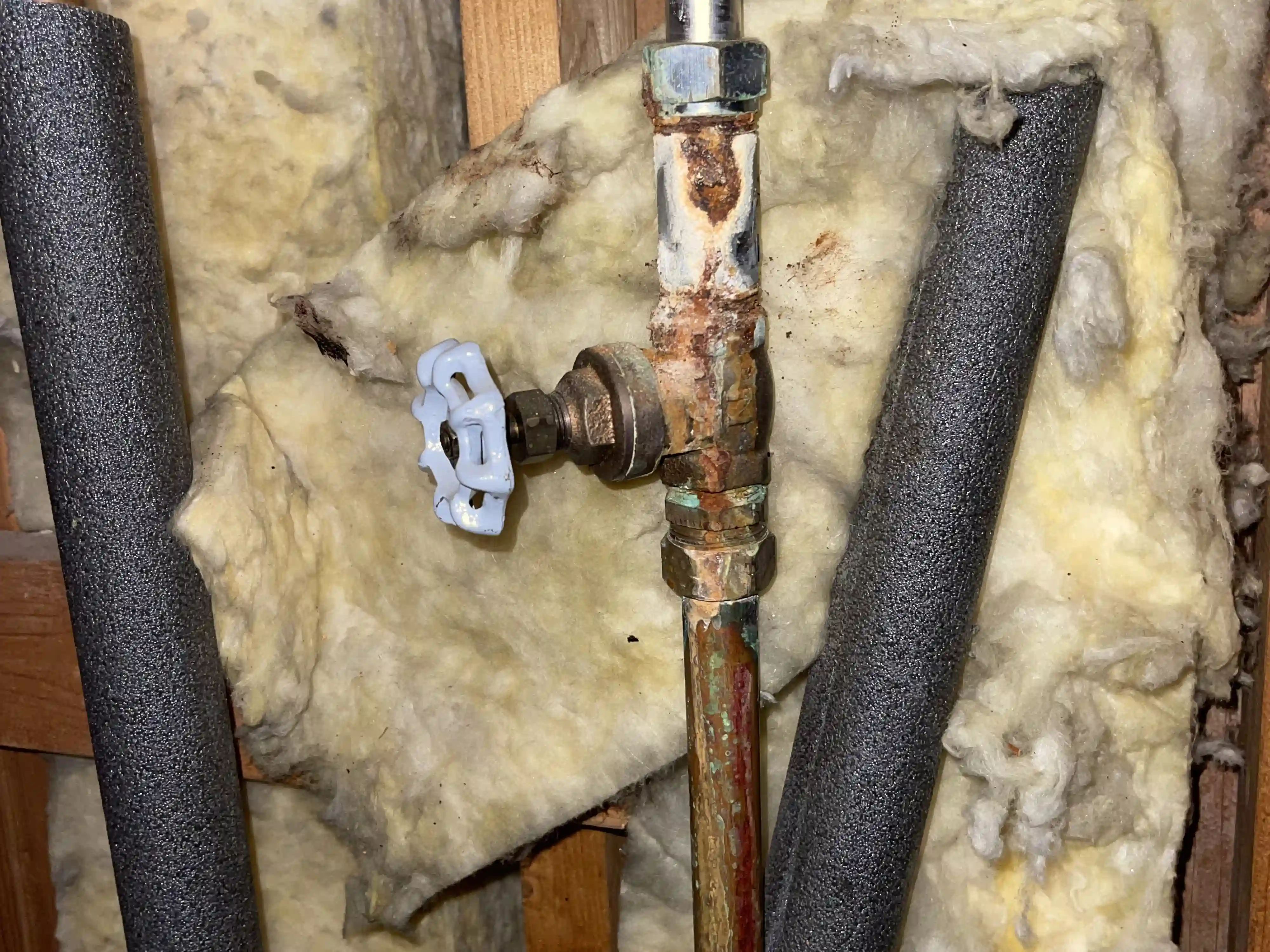
A Valve or Connection Is Leaking
Seeing water around the water heater doesn’t automatically mean the tank itself has failed.
Water can leak from:
- Supply connections
- Shutoff valves
- Flexible connectors
- Drain valve
- Temperature and pressure relief valve
- Nearby plumbing
Some of these problems are repairable without replacing the water heater.
The important question is:
Where is the water actually coming from?
The Leak That Usually Changes Everything
There is a major difference between:
a fitting leaking near the water heater
and
the water heater tank itself leaking.
A storage tank holds water under pressure while repeatedly heating and cooling for years.
Eventually corrosion can weaken the tank.
Once the actual storage tank develops a leak, replacing a valve or tightening a fitting won’t solve it.
A leaking tank is generally a strong indication that the water heater needs replacement.
And it shouldn’t be ignored.
A small amount of water around the bottom today can become a much larger leak tomorrow.
If water is actively escaping and you aren’t sure how to stop it, knowing how to shut off your home’s water supply can prevent additional damage while you wait for help.
Houston Water Makes Maintenance Important
Houston-area water contains dissolved minerals.
As a water heater operates, some of those minerals can settle at the bottom of the tank as sediment.
Over time, sediment can accumulate.
That can contribute to:
- Reduced efficiency
- Less usable hot water
- Rumbling or popping noises
- Longer heating cycles
- Additional stress on components
This is one reason water heater maintenance matters.
Houston’s water conditions don’t automatically destroy water heaters, but mineral accumulation is something homeowners shouldn’t ignore.
We explain the broader plumbing effects in our guide to Houston hard water and how it affects your plumbing.
Why Is My Water Heater Making Popping or Rumbling Sounds?
A noisy tank doesn’t necessarily mean it’s about to explode.
One common cause is sediment.
As sediment accumulates at the bottom of a gas water heater, water can become trapped beneath or around those deposits.
When heated, that water can create popping, crackling, or rumbling sounds.
The bigger question is how long this has been happening and what condition the tank is in.
A relatively young system may simply need maintenance.
Heavy sediment inside an older tank can be another sign that you’re approaching the point where investing heavily in repairs doesn’t make sense.
Rusty or Discolored Hot Water
Pay attention to whether discoloration occurs:
only from the hot side
or
from both hot and cold water.
If only hot water is rusty or discolored, the water heater deserves investigation.
Possible causes include:
- Internal corrosion
- Sediment
- Anode rod deterioration
- Plumbing corrosion
That doesn’t automatically mean replacement.
But rusty hot water from an aging tank is something you shouldn’t ignore.
What Repair vs. Replacement Actually Costs in Houston
Because the decision is usually “spend a few hundred now or a few thousand once,” it helps to see both columns. The repair figures below are general Houston-area market ranges as of October 2026, not Hugo Plumbing prices; the replacement figure is ours.
| Repair | Typical Houston-area range (market, Oct 2026) | Worth it when |
|---|---|---|
| Thermostat or heating element (electric) | roughly $150–$350 | Tank under 8 years, no corrosion |
| Thermocouple or igniter (gas) | roughly $150–$300 | Pilot won’t stay lit, tank otherwise sound |
| T&P relief valve or drain valve | roughly $200–$450 | Leak is at the valve, not the tank |
| Gas control valve | roughly $300–$600 | Tank under 8 years; otherwise lean toward replacing |
| Anode rod + flush + disinfect | roughly $250–$500 | Rotten-egg hot water or heavy sediment on a younger tank |
| Dip tube | roughly $150–$300 | Hot water runs out fast on a tank under 10 years |
| Replacement | Houston-area market price |
|---|---|
| Standard tank (40–50 gal), installed by Hugo Plumbing | Starts around $2,500; rises with tank size, venting, attic location, and code items (pan, expansion tank, gas connector). $200 coupon on high-efficiency units. |
| Tankless-for-tankless swap | Roughly $2,500–$4,500 as of September 2026 |
| Tank-to-tankless conversion | Roughly $4,000–$7,500+ as of September 2026, driven by gas line, venting, and electrical |
How to read it, using general market figures: a $250 element on a four-year-old electric tank is an easy yes. A $550 gas valve on an eleven-year-old tank with rust at the bottom seam is money toward a replacement you’ll be buying within a year or two anyway. The 50% rule below is a decent tiebreaker; the age and the condition of the tank break the tie when the numbers are close. Full replacement pricing factors are in our water heater replacement cost guide, and the tankless side is in the tankless cost guide.
Repair Makes More Sense When…
Repair is often reasonable when:
- The water heater is relatively young
- The tank itself isn’t leaking
- The problem is isolated
- The unit hasn’t required repeated repairs
- There isn’t significant visible corrosion
- Replacement parts are readily available
- The system otherwise meets the household’s needs
For example, replacing a failed component on an otherwise healthy unit can be completely reasonable.
The goal isn’t to replace equipment simply because something broke.
It’s to determine whether repairing it gives you reasonable value.
Replacement Makes More Sense When…
Replacement becomes more attractive when several warning signs start appearing together.
The Tank Is Leaking
This is the big one.
If the tank itself has failed, replacement is generally necessary.
The Unit Is Near the End of Its Expected Life
Age alone doesn’t condemn a water heater.
But putting significant money into an aging unit deserves careful consideration.
Repairs Keep Adding Up
One repair is normal.
Repeated repairs are different.
If you’re calling a plumber every few months for another water heater problem, start adding those costs together.
There’s Significant Corrosion
Visible corrosion around the tank, connections, or components can indicate broader deterioration.
It No Longer Meets Your Household’s Needs
Sometimes the water heater isn’t technically broken.
Your household has simply outgrown it.
Maybe:
- More people live in the house
- Bathrooms were added
- Hot-water usage increased
- The current tank was undersized from the beginning
In that situation, repairing the existing equipment doesn’t solve the underlying problem.
The 50% Rule: Useful, But Don’t Treat It as Law
You may see advice online suggesting:
If the repair costs more than 50% of replacement, replace the water heater.
That’s a useful way to think about the decision, but it shouldn’t be treated as an absolute rule.
Consider:
- Age
- Overall condition
- Repair history
- Warranty
- Efficiency
- Household needs
- Type of failure
Spending money repairing a nearly new water heater may make perfect sense.
Making an expensive repair to a heavily corroded older tank may not.
The entire situation matters.
What About the Warranty?
Before paying for a major repair, check the water heater warranty.
Depending on the manufacturer and age of the unit, certain components or the tank itself may still have coverage.
You’ll typically need:
- Manufacturer
- Model number
- Serial number
The warranty may cover the part without covering all labor or related costs, so verify the details rather than assuming everything is included.
Tank vs. Tankless: Replacement Gives You Another Choice
If replacement is the right decision, you don’t necessarily have to install exactly what you had before.
This is when homeowners often start considering:
traditional tank
versus
tankless.
Both can be good solutions.
The right choice depends on:
- Household hot-water demand
- Available gas or electrical capacity
- Installation requirements
- Available space
- Upfront budget
- Long-term plans for the home
We’ve compared the two options in our guide to standard vs. tankless water heaters in Houston.
Don’t choose tankless simply because it’s newer technology.
And don’t automatically stay with a tank because that’s what the house currently has.
Look at what makes sense for the property.
How Much Does Water Heater Replacement Cost in Houston?
Replacement price depends on considerably more than the water heater sitting in the box.
Factors can include:
- Tank vs. tankless
- Capacity
- Gas vs. electric
- Existing connections
- Venting
- Location
- Code requirements
- Drain pan requirements
- Shutoff components
- Gas line modifications
- Electrical requirements
- Removal of the old unit
That’s why two installations using similar water heaters can have different total costs.
We break those factors down separately in our guide to water heater replacement cost in Houston.
Don’t Ignore Water Around the Tank
If you’ve found water around the water heater, don’t immediately assume the tank failed.
But don’t ignore it either.
First determine where the water is coming from.
Check visually around:
- Top connections
- Shutoff valve
- Supply lines
- T&P relief valve
- Drain valve
- Bottom of the tank
Don’t remove panels or work around electrical or gas components unless you know what you’re doing.
If water is actively spreading, protecting the house comes first.
Questions to Ask Before Replacing Your Water Heater
Before approving replacement, ask:
- How old is my current water heater?
- What exactly failed?
- Is the tank itself leaking?
- Can the failed component be replaced?
- What condition is the rest of the unit in?
- Is there significant corrosion?
- Is the unit still under warranty?
- Is the current water heater properly sized?
- Would repairing it be reasonable for its age?
- Should I consider tankless?
- Are any plumbing, gas, venting, or electrical modifications required?
A good recommendation should explain why replacement makes more sense than repair.
How Hugo Plumbing Can Help
Sometimes the answer is a straightforward repair.
Sometimes replacement is clearly the better investment.
The important part is determining which situation you’re actually dealing with.
Hugo Plumbing provides water heater repair and installation in Houston for traditional and tankless systems.
We can diagnose the problem, determine whether the tank itself has failed, evaluate the age and condition of the equipment, and explain the available options before you decide how to proceed.
If replacement makes more sense, we can also help determine the appropriate type and size of water heater for your home.
Frequently Asked Questions
Is it better to repair or replace a water heater?
It depends on the age of the water heater, what failed, its overall condition, and whether the problem is likely to return.
A relatively young unit with a replaceable component may be worth repairing, while an older tank with corrosion, repeated problems, or a leaking tank may be a better candidate for replacement.
How long do water heaters last in Houston?
Traditional tank water heaters commonly last around 8 to 12 years, although actual lifespan varies with installation, maintenance, water quality, usage, and operating conditions.
Houston’s mineral-rich water can contribute to sediment buildup inside the tank, making regular maintenance especially important.
Can a leaking water heater be repaired?
Sometimes.
Leaks from valves, fittings, connections, or certain components may be repairable.
If the storage tank itself has corroded and is leaking, the tank generally cannot be reliably repaired and replacement is usually necessary.
Why does my water heater keep running out of hot water?
Possible causes include sediment buildup, failed heating elements, thermostat problems, burner issues, an undersized water heater, or increased household demand.
The cause should be diagnosed before assuming the entire water heater needs replacement.
How much does water heater repair cost compared to replacement in Houston?
As of October 2026, common Houston-area water heater repairs are general market ranges of roughly $150 to $350 for a thermostat, heating element, or thermocouple, $200 to $450 for a temperature-and-pressure relief valve or drain valve, $300 to $600 for a gas control valve, and $250 to $500 for an anode rod and flush; those are market estimates, not Hugo Plumbing prices. A new standard tank water heater installed by Hugo Plumbing starts around $2,500 and rises with tank size, venting, attic placement, and code items like a pan and expansion tank, and our $200 coupon applies to high-efficiency units. When a repair approaches half the cost of a new unit on a tank over eight years old, replacement usually wins.
Should I replace my water heater before it fails?
It can make sense when an older water heater shows significant corrosion, recurring problems, rusty water, tank deterioration, or other warning signs.
Planned replacement also gives you time to compare tank and tankless options instead of making the decision while your house has no hot water.
Repair What’s Worth Repairing. Replace What’s Ready to Go.
A broken water heater doesn’t automatically need to be replaced.
And a water heater that can technically be repaired isn’t automatically worth repairing.
The smart decision comes down to the failure, age, condition, repair history, and what your household needs from the system.
If you’ve lost hot water, found water around the tank, or have an older water heater that’s becoming increasingly unreliable, Hugo Plumbing can inspect it and help you determine whether repair or replacement makes more sense.
Schedule water heater repair or replacement with Hugo Plumbing.
Call or text (713) 409-7176 for a free estimate and a written price.
If your drain won’t go, call Hugo.
Explore Our Plumbing Services
See all plumbing services, the areas we serve, or more plumbing tips.