
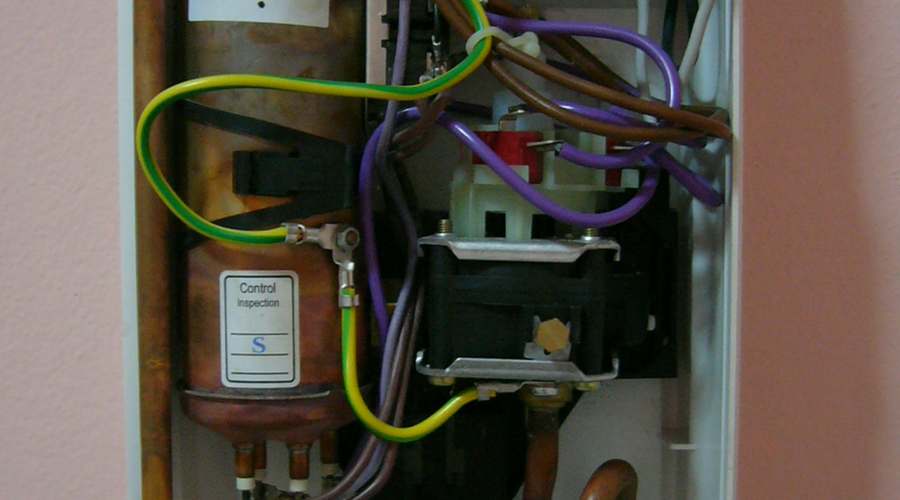
There’s no worse way to start a Houston morning than a shower that never warms up. When your water heater stops delivering, it’s tempting to assume the worst — but plenty of hot water problems have simple causes you can check yourself before calling anyone. Here’s how to troubleshoot no hot water, what’s safe to check, and when it’s time to bring in a plumber.
First: Gas or Electric?
Before troubleshooting, know which kind of water heater you have, because the failure points are different. A gas heater has a burner, a pilot light or electronic igniter, and a gas supply line. An electric heater has heating elements, thermostats, and a dedicated circuit breaker. If you’re not sure, look for a gas line and a small access panel near the bottom (gas) versus a thick electrical cable running into the top (electric).
No Hot Water At All
If you’re getting zero hot water, the heater has stopped producing it entirely.
On an electric heater:
- Check the breaker. A tripped breaker is the most common cause. Flip it fully off, then back on. If it trips again immediately, stop — that points to an electrical fault that needs a pro.
- Check the reset button. Electric heaters have a red reset (high-limit) button on the upper thermostat behind the access panel. If it’s popped, press it. If it keeps tripping, the thermostat or element is failing.
On a gas heater:
- Check the pilot light or igniter. If the pilot is out, follow the relighting instructions printed on the tank. If it won’t stay lit, the thermocouple is likely bad.
- Check the gas supply. Make sure the gas valve to the heater is fully open and other gas appliances are working.
Safety note: If you ever smell gas, don’t touch switches or try to relight anything — leave the home and call your gas utility and a plumber from outside. Gas work is not a DIY job.
Not Enough Hot Water, or It Runs Out Fast
If you get hot water but it doesn’t last, the tank is usually the problem.
- Sediment buildup. This is the number-one cause in Houston. Our hard water leaves a thick layer of mineral sediment at the bottom of the tank that takes up space and insulates the heating element from the water. The fix is flushing the tank — ideally once a year.
- A failing heating element. Electric heaters have two elements; when the lower one fails, you get a little hot water that runs out fast.
- Thermostat set too low. Check that the thermostat is set around 120°F. Higher wastes energy and risks scalding; much lower leaves you short.
- An undersized tank. If your household has grown, the tank may simply be too small — a good moment to consider a larger unit or going tankless.
Water That’s Too Hot, Rusty, or Smelly
- Scalding hot water usually means the thermostat is set too high or has failed — turn it down to 120°F and see if it stabilizes.
- Rusty or brown hot water points to corrosion inside the tank or a spent anode rod, often a sign the heater is nearing the end of its life.
- Rotten-egg smell is bacteria reacting with the anode rod, common on well water; it can sometimes be resolved with a flush and anode replacement.
When to Call a Plumber
You can safely reset a breaker, relight a pilot, or adjust a thermostat. It’s time to call a pro when:
- The breaker or reset button keeps tripping.
- The pilot won’t stay lit or you suspect a gas issue.
- Water is leaking from the tank itself (not a fitting) — this can’t be repaired and means replacement.
- You’ve flushed the tank and still run out fast.
- The heater is more than 10 years old and acting up.
Our water heater repair and installation team can diagnose the exact fault, flush and service the tank, replace elements or thermostats, or install a new unit when that’s the smarter call.
How Hugo Plumbing Can Help
At Hugo Plumbing, we’ve repaired and replaced water heaters across Houston for over 20 years — gas and electric, tank and tankless. We’ll find out exactly why yours quit, tell you honestly whether a repair or replacement makes more sense, and get your hot water back the same day whenever we can. And because we know Houston’s hard water is what wears these units down, we can help you protect the next one, too. (Weighing a replacement? Our guide to tankless vs. standard water heaters breaks down the choice.)
Frequently Asked Questions
Why did my hot water suddenly stop working? The most common causes are a tripped breaker or blown thermostat on an electric heater, a pilot light or ignition failure on a gas heater, or a failed heating element or thermostat. If you have no hot water at all and it happened suddenly, start by checking the breaker (electric) or the pilot/ignition (gas) before calling a plumber.
Why do I run out of hot water so quickly? Running out fast usually means sediment has built up inside the tank, taking up space that should hold hot water and insulating the heating element. It can also mean a failing lower heating element or a tank that’s simply too small for your household. On Houston’s hard water, sediment buildup is the most common culprit, and flushing the tank often helps.
Is it worth repairing a water heater or should I replace it? As a rule of thumb, if your tank heater is under about 8 years old, a repair usually makes sense. Past 10 to 12 years, or if it’s leaking from the tank itself, replacement is typically the smarter investment. Hugo Plumbing can assess the age, condition, and cost either way and give you an honest recommendation.
Get Your Hot Water Back
Call or text (713) 409-7176 for a free estimate and a written price.
A cold shower is usually fixable — sometimes with a flipped breaker or a relit pilot, sometimes with a flush or a new part. But when the simple checks don’t do it, don’t tough out cold showers waiting for the problem to get worse. Hugo Plumbing can track down exactly what’s wrong and get your hot water flowing again. If your drain won’t go, call Hugo.
Explore Our Plumbing Services
See all plumbing services, the areas we serve, or more plumbing tips.