
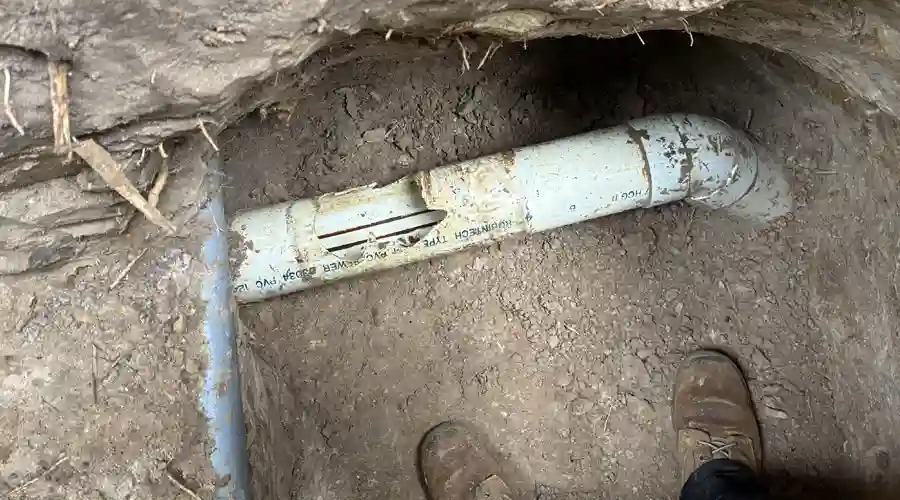
A sewer backup is bad enough.
Then somebody mentions the words “sewer line repair”, and the next question is almost always:
How much is this going to cost?
Unfortunately, there isn’t one flat price for sewer line repair in Houston.
A plumber repairing a short damaged section five feet from the house is dealing with a completely different job than a crew replacing a deep sewer line underneath a driveway, patio, mature tree, or forty feet of yard.
That’s why getting an accurate diagnosis before approving excavation matters so much.
If you’re dealing with recurring backups, gurgling toilets, sewage odors, or a drain that keeps clogging no matter how many times it’s cleared, here’s what actually determines the cost of sewer line repair in Houston — and how to know whether you need a simple repair or something more extensive.
What Is the Main Sewer Line?
Every sink, shower, bathtub, toilet, washing machine, and other drain in your home eventually connects into larger drain pipes.
Those lines ultimately feed into your home’s main sewer line.
The main sewer line carries wastewater away from the house and toward the municipal sewer system.
When one bathroom sink clogs, the problem is usually close to that fixture.
When several fixtures start backing up together, the problem may be much farther downstream.
That’s why one of the biggest warning signs of a sewer line problem is:
multiple drains acting up at the same time.
If you’re still trying to determine whether the sewer line is actually the problem, start with our guide to the 7 warning signs of a sewer line problem in your Houston home.
Why Sewer Line Repair Costs Vary So Much
Most of the price difference comes from five things:
- What is actually wrong with the pipe
- Where the damage is located
- How deep the sewer line is
- How much pipe needs to be repaired
- What sits above the sewer line
Let’s break those down.
1. The Type of Sewer Line Damage
Not every sewer problem requires replacing a pipe.
Sometimes the sewer itself is structurally fine and simply needs to be cleaned.
Other times there is physical damage.
Common sewer line problems include:
- Tree root intrusion
- Heavy buildup inside the pipe
- Offset pipe joints
- Cracked pipe
- Broken pipe
- Collapsed pipe
- Corrosion
- Bellied or sagging pipe
- Separated connections
- Foreign objects
- Deteriorated older piping
These problems require very different solutions.
For example, roots entering through one joint may be removable.
A completely collapsed pipe isn’t going to be fixed by running a drain cable through it.
That’s why repeatedly clearing the same sewer line without figuring out why it keeps clogging can become expensive.
2. Where the Problem Is Located
Location matters enormously.
Imagine two broken sewer pipes.
The first is underneath an open section of front yard.
The second is underneath:
- A driveway
- Patio
- Pool deck
- Landscaping
- Large tree
- Interior slab
- Detached structure
The plumbing problem may be identical.
The access problem isn’t.
Excavation, concrete removal, restoration, and working conditions can all affect the final scope of the job.
3. How Deep the Sewer Line Is
Sewer lines depend on gravity, so they slope downward as they travel away from the house.
That means the pipe may become deeper the farther it runs.
A shallow sewer repair is generally easier to access than a pipe several feet underground.
Depth can affect:
- Excavation
- Labor
- Equipment
- Safety requirements
- Amount of soil removed
- Restoration afterward
This is one reason a plumber needs to know exactly where the defect is before the yard is opened.
4. How Much Pipe Is Damaged
One cracked fitting is different from forty feet of deteriorated pipe.
If the sewer line has one isolated failure and the surrounding pipe is healthy, a targeted repair may make sense.
If a camera inspection reveals:
- Multiple cracks
- Repeated root entry
- Several offset joints
- Extensive corrosion
- Collapsing pipe
- Major sections holding water
then fixing one small section may only postpone the next repair.
The question shouldn’t simply be:
“Can this spot be repaired?”
It should also be:
“What condition is the rest of the sewer line in?”
5. What’s Above the Pipe
A sewer line running underneath grass is usually easier to access than one underneath finished surfaces.
Repair costs can increase when crews have to work around or restore:
- Concrete
- Driveways
- Walkways
- Patios
- Landscaping
- Retaining walls
- Fences
- Irrigation systems
This doesn’t automatically mean a huge excavation is required.
But it’s one of the factors that needs to be considered before selecting a repair method.
Start With a Sewer Camera Inspection
Before anybody starts digging, the first question should be:
What exactly are we repairing?
A sewer camera inspection allows a plumber to visually inspect the inside of the line.
The camera can help identify problems such as:
- Roots
- Cracks
- Broken sections
- Corrosion
- Offset joints
- Bellies
- Standing water
- Heavy buildup
- Collapsed pipe
- Foreign objects
More importantly, it helps determine whether the problem is:
a blockage
or
a structural failure.
That distinction can save a homeowner from paying for a repair they don’t actually need.
Hugo Plumbing provides sewer line repair in Houston and can inspect the system before recommending how much of the line actually needs attention.
Sewer Cleaning vs. Sewer Repair
These are not the same thing.
Sewer Cleaning
If the pipe itself is intact but blocked by:
- Grease
- Sludge
- Debris
- Roots
- Buildup
professional drain cleaning may restore flow.
But clearing the obstruction doesn’t always eliminate the reason it formed.
For example, tree roots usually enter sewer lines through an existing opening such as:
- A cracked pipe
- Loose joint
- Separated connection
Removing the roots restores flow.
It doesn’t necessarily seal the opening they entered through.
That’s why recurring root problems deserve a closer look.
We explain that in more detail in our guide to tree roots in Houston sewer lines.
Sewer Repair
Repair becomes necessary when the pipe itself is damaged.
That might mean repairing:
- One joint
- One cracked section
- One collapsed area
- One connection
If everything else looks healthy, a targeted repair can make perfect sense.
Sewer Line Replacement
Replacement becomes more reasonable when a large portion of the sewer has reached the end of its usable life.
Examples include:
- Multiple failures
- Extensive deterioration
- Significant collapse
- Numerous root entry points
- Repeated repairs
- Severely damaged older piping
The objective isn’t to replace more pipe than necessary.
It’s to avoid repairing one three-foot section today if the camera shows the next thirty feet are failing too.
Traditional Sewer Line Repair
Traditional sewer repair generally involves excavating the area above the damaged pipe.
Once exposed, the plumber can:
- Remove the damaged section
- Install new piping
- Correct the slope if necessary
- Reconnect the sewer
- Test the line
- Backfill the excavation
Traditional excavation is sometimes the simplest and most reliable repair method.
Especially when:
- The damaged area is easy to reach
- The pipe is shallow
- The repair is localized
- There are major alignment problems
- The line has collapsed
The word “trench” sounds dramatic, but an open excavation isn’t automatically the wrong solution.
Sometimes it’s the most direct one.
What About Trenchless Sewer Repair?
You may have seen sewer companies advertise:
No digging!
or
Trenchless sewer replacement!
Trenchless technology can be useful, but it isn’t appropriate for every pipe.
The existing sewer line needs to meet certain conditions depending on the method being considered.
For example, a severely collapsed sewer that no longer provides a usable path may require excavation before another method can work.
Other factors include:
- Pipe material
- Pipe diameter
- Number of bends
- Connections
- Existing collapse
- Sewer alignment
- Accessibility
The best repair method depends on the actual pipe, not the marketing term.
Tree Roots Are a Major Sewer Problem
Houston’s mature neighborhoods are full of large trees.
That’s great for shade.
Not always great for sewer lines.
Tree roots naturally grow toward moisture.
A perfectly sealed sewer pipe shouldn’t allow roots inside.
But give them a small opening around a failed joint or cracked section and they’ll find it.
Once roots enter the pipe, they can catch:
- Toilet paper
- Waste
- Grease
- Wipes
- Debris
That turns a small root intrusion into a major blockage.
The roots may be removed during cleaning, but if the opening remains, they’ll often come back.
If you’re experiencing repeat sewer problems near large trees, read our guide to why tree roots invade sewer lines in Houston.
Flushable Wipes Can Make an Existing Sewer Problem Worse
A pipe with roots or a rough damaged interior catches material more easily than a clean, smooth sewer line.
That’s one reason so-called flushable wipes can create such serious problems.
They don’t break apart like toilet paper.
Instead, they can hang onto:
- Roots
- Rough pipe walls
- Offset joints
- Scale
and start building a blockage.
If wipes are part of your household routine, read why flushable wipes clog Houston sewer lines.
Signs You May Need More Than Drain Cleaning
One slow drain doesn’t automatically mean sewer failure.
But these symptoms deserve more investigation:
Multiple Fixtures Back Up Together
If flushing a toilet makes water rise in a shower or bathtub, the problem is probably downstream from both fixtures.
The Same Sewer Backup Keeps Returning
If the sewer is cleaned and backs up again shortly afterward, there may be a structural problem.
Toilets Gurgle
Air trapped by restricted drainage can cause bubbling or gurgling.
Sewage Appears in the Yard
Wastewater outside is an obvious sign that something is seriously wrong.
One Area of the Yard Is Always Wet
A damaged sewer line may keep the surrounding soil wet.
You Smell Sewer Gas
A damaged line or failed connection can allow odors to escape.
The Camera Shows Standing Water
A sewer should maintain enough slope to carry wastewater away.
Standing water may indicate a belly or alignment problem.
What Is a Sewer Belly?
A sewer belly is a low section of pipe where wastewater collects instead of continuing downhill.
Remember: sewer lines rely on gravity.
If part of the pipe sinks, water and waste can accumulate in that low spot.
Over time it may collect:
- Grease
- Solids
- Paper
- Debris
and create repeat blockages.
A drain machine may clear the accumulated material.
But it can’t change the slope of the pipe.
If the belly is severe enough to cause repeated problems, the affected section may need to be corrected.
Can You Repair a Sewer Line Yourself?
Clearing a simple fixture clog is one thing.
Repairing an underground sewer line is another.
Homeowners can do some useful troubleshooting:
- Check whether multiple fixtures are affected
- Stop using water if sewage is backing up
- Check whether cleanouts are overflowing
- Note whether backups happen after heavy water use
- Avoid flushing anything else
But underground sewer repair typically requires:
- Locating equipment
- Camera inspection
- Excavation
- Pipe installation
- Proper sewer slope
- Correct fittings
- Testing
A sewer pipe installed with incorrect slope can create a brand-new drainage problem even if the pipe itself doesn’t leak.
Does Homeowners Insurance Cover Sewer Line Repair?
Maybe.
Coverage varies substantially between policies.
Some standard homeowners policies may cover certain resulting damages while excluding deterioration of the underground service line itself.
Some homeowners purchase separate:
service line coverage
that may apply to underground utilities such as:
- Water lines
- Sewer lines
- Electrical lines
But coverage depends on:
- Your policy
- The cause of failure
- The damaged property
- Any endorsements you’ve purchased
Before assuming something is covered, contact your insurance provider.
If you discover significant sewer damage, document:
- Camera findings
- Visible damage
- Sewage backup
- Property damage
- Repair recommendations
- Photos and video
before major restoration work begins.
Repair or Replace? Questions to Ask Your Plumber
Before approving a sewer repair, ask:
- What exactly is wrong with the pipe?
- Can you show me the camera footage?
- Where is the damaged section?
- How long is the damaged area?
- What material is the sewer line?
- Is the rest of the pipe in good condition?
- Are there roots?
- Is there a belly?
- Has any section collapsed?
- Can one section be repaired?
- Why are you recommending repair instead of replacement?
- Why are you recommending replacement instead of repair?
- Will excavation be required?
- What surfaces will need to be restored?
- How will the sewer be tested afterward?
A homeowner should understand the problem before agreeing to the solution.
Don’t Replace a Sewer Line Based on Guesswork
A sewer backup can feel urgent.
Sometimes it is.
But urgency doesn’t mean diagnosis should be skipped.
Before replacing a sewer line, you should know:
where the problem is
what caused it
how much pipe is affected
and
what condition the rest of the line is in.
That’s what a camera inspection helps establish.
How Hugo Plumbing Handles Sewer Line Problems
The goal is to identify the problem before recommending the repair.
If the issue is simply a blockage and the sewer itself is healthy, you may need professional drain cleaning rather than excavation.
If the line has structural damage, Hugo Plumbing can determine where the failure is located and evaluate the available sewer line repair options.
And if tree roots are involved, we want to know whether we’re dealing with:
- Roots growing through one failed joint
- Multiple root entry points
- A cracked pipe
- A larger section of deteriorating sewer
Those scenarios shouldn’t automatically receive the same repair.
Frequently Asked Questions
How much does sewer line repair cost in Houston?
Sewer line repair costs in Houston vary significantly because the price depends on the location and depth of the damaged pipe, the length of sewer line involved, the repair method, accessibility, landscaping or concrete above the line, and whether the problem can be repaired in one section or requires a larger replacement.
Accurate diagnosis with a sewer camera inspection is usually the best first step before estimating the repair.
Is it cheaper to repair or replace a sewer line?
Repairing one damaged section is usually less expensive when the rest of the sewer line is still in good condition.
Replacement may make more financial sense when the pipe has widespread deterioration, multiple breaks, severe root intrusion, recurring collapses, or repeated repairs in different sections.
A camera inspection helps determine whether the problem is isolated or affects the entire line.
Can a sewer line be repaired without digging up the entire yard?
Sometimes.
Depending on the pipe material, location, condition, and type of damage, plumbers may be able to use repair methods that require less excavation than traditional trenching.
Not every sewer line qualifies, so the pipe should be inspected before deciding which repair method is appropriate.
Does homeowners insurance cover sewer line repair?
Coverage varies by insurance policy and by the cause of the damage.
Standard homeowners policies may not automatically cover underground sewer line deterioration, root intrusion, or normal wear.
Some homeowners purchase additional service-line coverage.
Contact your insurance provider and review your specific policy before assuming the repair is covered.
How do I know if my sewer line needs repair?
Common warning signs include multiple drains backing up at the same time, toilets gurgling, sewage odors, recurring drain clogs, unusually wet areas of the yard, sewage appearing outside, and backups that return shortly after drain cleaning.
A sewer camera inspection can show whether the problem is a blockage, roots, broken pipe, belly, offset joint, or collapsed sewer line.
Find the Problem Before You Dig
The most expensive sewer repair is the one that starts before anyone knows what they’re looking for.
A backup doesn’t automatically mean you need a new sewer line.
But a sewer that repeatedly backs up shouldn’t be treated as “just another clog” either.
If you’ve got multiple drains backing up, toilets gurgling, sewage odors, recurring clogs, or a sewer line that was recently cleaned and is already causing trouble again, it’s time to find out what’s happening inside the pipe.
Hugo Plumbing provides sewer line repair in Houston and professional drain diagnostics to determine what actually needs to be repaired.
Call or text (713) 409-7176 for a free estimate and a written price.
If your drain won’t go, call Hugo.
Explore Our Plumbing Services
See all plumbing services, the areas we serve, or more plumbing tips.