
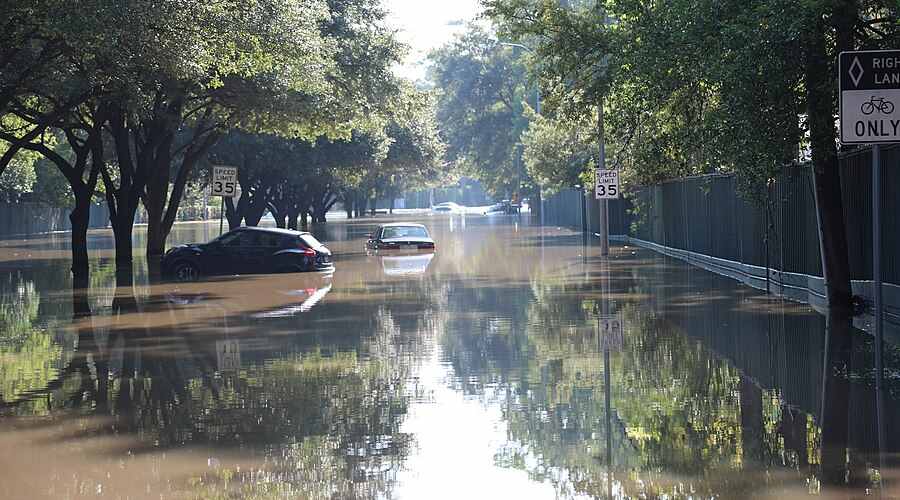
Houston doesn’t ease into hurricane season — it gets weeks of quiet, then a forecast cone, then two feet of rain in three days. Most homeowners think about plywood and generators. Almost nobody thinks about their plumbing, even though the water that does the real damage usually comes up through it or pours out of it. The good news: an afternoon of prep now can save you a flooded hallway, a sewage backup, or a five-figure repair later. Here’s the checklist we’d run on our own homes.
Why Storms Are a Plumbing Event
When a tropical system parks over Harris County, three things happen underground at once.
First, the storm sewers and sanitary sewers fill beyond capacity. When the city main surcharges, wastewater seeks the lowest opening it can find — and in a one-story Houston home, that can be your shower drain or toilet.
Second, our clay soil becomes saturated and starts to move. The same expansive clay that causes slab leaks swells dramatically when soaked, shifting and stressing the water and sewer lines buried in it. A lot of “the storm broke my pipe” calls are really “the soil moved and the pipe lost.”
Third, floodwater finds every weakness. A cracked sewer pipe or a loose cleanout cap lets groundwater pour into your line, filling it before the rain even peaks — so your drains slow down right when you need them most.
The Pre-Storm Plumbing Checklist
Run through this before a storm is in the Gulf, not the night before landfall.
- Find your main water shutoff — today. If a supply line breaks during the storm, or water starts entering the house, you want to kill the water in seconds, not search for a valve in the rain. Our guide to shutting off your water main shows you exactly where to look and what tool you may need. Test the valve now; a shutoff that’s seized open is no shutoff at all.
- Clear your drains before the sky does it for you. Gutters, downspouts, yard drains, and area drains are your home’s first line of defense. Clear leaves and debris so roof and lot water actually leaves your property. Inside, fix any slow drain now — a drain that’s sluggish on a sunny day will back up in a storm. If more than one fixture is draining slowly, that’s a mainline symptom worth professional drain cleaning before the rain arrives.
- Check your sewer cleanout cap. That white capped pipe in your yard is the access point to your sewer line. A missing or cracked cap lets storm runoff pour straight into the sanitary sewer — overloading your line and the city’s. Caps cost a few dollars at any hardware store; sewage in your hallway costs considerably more.
- Consider a backwater valve if you’ve flooded before. It’s a one-way flap on your sewer line that physically blocks city backups from reaching your drains. For homes in low-lying neighborhoods or with a history of storm backups, it’s one of the highest-value protections a plumber can install.
- Test the sump pump if you have one. Some Houston homes — especially those with below-grade garages or exterior drainage basins — rely on a pump. Pour a bucket of water into the basin and confirm the pump kicks on and discharges away from the foundation. A pump that hasn’t run since spring is a gamble.
- Give your water heater a once-over. Know where its gas or electrical shutoff is, and if it sits in a garage or closet that has flooded before, ask about elevating it on a code-compliant stand. If it’s already showing its age, a controlled replacement now beats an emergency one after floodwater kills it.
- Fix known leaks before the storm. A pipe that’s already weeping is the one most likely to let go when pressure fluctuates and soil shifts. If you’ve been putting off a repair — or your water bill has been creeping up — handle it while plumbers aren’t running storm calls.
During the Storm
- Ease off the drains. Skip laundry and the dishwasher during the heaviest rain. The sewer system is at its limit; don’t add hundreds of gallons to it from inside your house.
- Listen for gurgling. Gurgling toilets and drains are the early warning that the sewer is surcharging. If you hear it, stop sending water down and keep an eye on the lowest drains in the house.
- If water starts coming in — or you evacuate — shut off the main. A burst supply line running unattended for two days does more damage than most storms.
After the Storm
The storm ends; the plumbing problems are often just getting started.
- Flooded water heater? Don’t relight it. Floodwater destroys gas valves and burners from the inside, and they can fail dangerously later. Have it inspected or replaced first.
- Watch how your drains recover. If drains stay slow, gurgle, or smell days after the water recedes, the line may have taken damage. Storm-shifted soil breaks and bellies sewer pipes — the warning signs of a failing sewer line tend to show up in the weeks after a flood.
- Run a meter check. With everything off, watch your water meter for movement. Saturated, shifting soil is exactly what causes underground supply-line breaks — and leak detection finds them before your bill and your foundation do.
- Mind boil-water notices. If pressure dropped during the storm, follow any city notice, then run cold taps to flush the lines once it lifts.
How Hugo Plumbing Can Help
We’ve been keeping Houston homes dry for over 20 years, which means we’ve seen every version of what a tropical system does to local plumbing — surcharged sewers, flood-killed water heaters, storm-shifted lines under the slab. Before a storm, we can camera-inspect your sewer line, clear a sluggish main, install a backwater valve, or replace that shutoff valve that won’t turn. Afterward, we handle emergency calls around the clock, and we’ll give you a straight answer on what the storm actually broke — and what it didn’t.
Frequently Asked Questions
Why do my drains back up during heavy rain in Houston? During a major storm, the city’s sewer system can take on more stormwater than it was built to carry. When the public main surcharges, wastewater looks for the lowest escape point, and that can be the floor drain, tub, or toilet in your home. Cracked private sewer lines make it worse by letting groundwater pour in and fill the line before the storm even peaks.
Should I shut off my water during a hurricane? You don’t need to shut off water for wind or rain alone. But if flooding starts entering your home, if you evacuate, or if you suspect a broken pipe, shut off the main valve. It’s one less source of water damage, and it protects your supply lines if pressure drops or a boil-water notice follows the storm.
What is a backwater valve and does my Houston home need one? A backwater valve is a one-way flap installed on your sewer line that lets wastewater flow out but slams shut if the flow reverses, blocking city sewage from backing up into your home. If your home sits low, has flooded before, or has ever had sewage come up a drain during heavy rain, it’s one of the best storm investments you can make.
My water heater was flooded. Is it safe to use? Don’t relight or power it up until it’s been inspected. Floodwater ruins gas valves, burners, insulation, and electrical components, and manufacturers generally require replacement of flooded gas control valves because they can fail unsafely. If the water rose above the bottom of the tank’s controls, have a plumber look at it before you use it.
What should I do if sewage backs up into my house during a storm? Stop using water immediately — every flush and every drain adds to the backup. Keep people and pets away from the sewage, since floodwater backups carry bacteria. Once the storm passes and the city main recedes, the backup usually drains, but the line should be camera-inspected: storm-saturated clay soil shifts pipes, and what looks like a one-time backup is often a newly broken line.
Get Ahead of the Season
Call or text (713) 409-7176 for a free estimate and a written price.
Hurricane season runs through November, and the worst of it for Houston is usually August and September — which means the best time to prep your plumbing is right now. Find your shutoff, clear your drains, cap your cleanout, and get anything that’s already limping fixed before the Gulf makes your schedule for you. If you’d rather have a professional set of eyes on it, Hugo Plumbing has been storm-proofing Houston homes for over 20 years and we’re happy to walk your system with you. If your drain won’t go, call Hugo.
Explore Our Plumbing Services
See all plumbing services, the areas we serve, or more plumbing tips.