
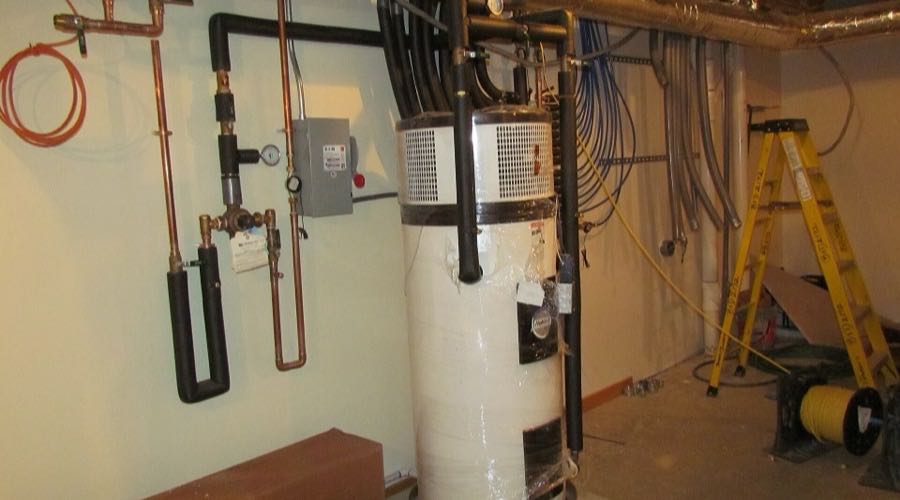
Short answer: yes. If your home is inside the City of Houston, replacing a water heater requires a plumbing permit and a city inspection. Most of the incorporated suburbs — Katy, Sugar Land, Pearland, Pasadena, Missouri City, Bellaire, and others — require the same through their own permit offices. Here’s what the permit actually covers, who handles it, what the inspector looks for, and why a plumber who skips it is telling you something.
Why a Water Heater Swap Is Permitted Work
A water heater is a pressure vessel holding 40 to 75 gallons of water at 120°F or more, usually connected to a gas line, and in Houston very often sitting in the attic above your bedrooms. The permit and inspection exist because the failure modes — a tank rupture, a flue leaking carbon monoxide, a relief valve that can’t relieve, a gas connector that leaks — are serious and completely invisible once the closet door closes. Texas treats water heater installation as plumbing work that must be done under a licensed master plumber, and the City of Houston layers the permit and inspection on top.
Who Pulls the Permit
The plumber. Permits are issued to the licensed plumbing contractor through the Houston Permitting Center, and the inspection is scheduled against that permit. At Hugo Plumbing the permit and inspection are part of every water heater replacement inside a jurisdiction that requires one — they’re in the written quote, not a surprise line item.
Texas law does allow a homeowner to do plumbing on their own homestead without a license, but that doesn’t waive the city’s permit or inspection, and it does mean you’re the one responsible for meeting code. For a gas water heater in an attic, that’s a lot to take on to save a permit fee.
What the Inspector Checks
This list is also a good checklist for judging any installer’s work, permitted or not:
- Drain pan and pan drain. Required for heaters in attics or anywhere a leak would damage the home. The pan must have a drain line that runs to the exterior or another approved termination — a pan with no drain is decorative.
- Temperature-and-pressure (T&P) relief valve with a full-size discharge line, sloped down, terminating in an approved location, never capped or reduced.
- Thermal expansion tank. When the home’s water supply has a backflow preventer, check valve, or pressure-reducing valve (most newer Houston homes do), heated water has nowhere to expand, and an expansion tank is required to keep pressure from spiking and lifting the T&P valve. This is the item most often missing on unpermitted installs.
- Venting and combustion air on gas units — correct vent size, slope, connections, and clearance, and enough air for the burner.
- Gas connector, shutoff, and sediment trap — an approved flex connector, an accessible shutoff, and a drip leg to catch debris before the gas valve.
- Cold-water shutoff valve on the inlet.
- Elevation and protection — ignition sources raised 18 inches off a garage floor, and protection from vehicle impact where applicable.
- Electrical on electric units — correct wire size, breaker, and disconnect.
- Clearances and access so the unit can be serviced and the burner and controls are reachable.
If an installer’s quote is much cheaper than everyone else’s, compare it against this list. The savings are usually the expansion tank, the pan drain, and the permit.
What Happens If You Skip It
- The city can require a retroactive permit and inspection, and the inspection may fail on the items above.
- Home sales. Buyers’ inspectors flag missing pans, expansion tanks, and improper venting, and unpermitted mechanical work shows up in disclosure questions. A permitted install with a passed inspection is a clean paper trail.
- Insurance. A leak or fire traced to an unpermitted, non-code installation gives an adjuster a reason to scrutinize the claim.
- Safety. This is the real one. The inspection exists to catch the carbon-monoxide and scald-and-rupture mistakes you’d never see.
Outside Houston City Limits
Incorporated suburbs (Katy, Sugar Land, Pearland, Pasadena, Missouri City, Bellaire, West University, Humble, and others) have their own building departments and generally require a permit and inspection for water heater replacement. Unincorporated Harris County — a large share of the Cypress, Spring, and Klein areas — has no county plumbing permit program, so there’s typically no permit for a swap, though the work must still be done by a licensed plumber and your MUD or HOA may have requirements. Not sure which you’re in? Tell us the address and we’ll know.
Timing
A water heater permit is issued quickly, and the inspection is usually scheduled within a few business days of the install. You’ll have hot water the day the heater goes in; the inspection confirms the install afterward and doesn’t hold up your shower.
The Bottom Line
Inside Houston and most surrounding cities, a water heater replacement needs a permit and passes an inspection, and the licensed plumber handles both. Ask any installer up front: Are you pulling the permit, and is it included? If the answer is anything but a plain yes, keep shopping. For what the replacement itself costs, see our water heater replacement cost guide; for whether yours is due, repair vs. replacement; and for the install itself, water heater repair & installation or tankless installation. Permits and inspections are included on every Hugo Plumbing install.
Frequently Asked Questions
Do I need a permit to replace a water heater in Houston?
Yes. The City of Houston requires a plumbing permit for water heater replacement, and the installation is inspected. The permit is pulled by the licensed plumber doing the work through the Houston Permitting Center, and the inspection confirms the heater is installed to current code. Most incorporated suburbs such as Katy, Sugar Land, Pearland, Pasadena, and Missouri City have similar requirements through their own permit offices.
Who pulls the water heater permit, me or the plumber?
The licensed plumber. In Texas, water heater installation is plumbing work that must be performed under a master plumber’s license, and the permit is issued to that license. Hugo Plumbing pulls the permit and schedules the inspection as part of the job; it is included in the written quote, not billed separately. A homeowner may legally do plumbing on their own homestead in Texas, but the city may still require the permit and inspection.
What does the inspector check on a water heater install in Houston?
Typically: a drain pan with a drain line to the exterior or an approved location for heaters in attics or above living space; a temperature-and-pressure relief valve with a properly sized and terminated discharge line; a thermal expansion tank where the home has a backflow preventer or pressure-reducing valve; correct venting and combustion air for gas units; an approved gas connector, shutoff, and sediment trap; a cold-water shutoff; seismic and elevation requirements where they apply; proper clearances; and, for electric units, correct wiring and disconnect.
What happens if a water heater is replaced without a permit?
The city can require a permit after the fact and an inspection that may fail on items like a missing pan or expansion tank; unpermitted work can surface in a home sale when the buyer’s inspector or title questions come up; and a leak or fire traced to an unpermitted install can complicate an insurance claim. The bigger practical risk is that an installer who skips the permit is also skipping the code items the inspection would have caught.
Is a permit required to replace a water heater in unincorporated Harris County?
Harris County itself does not issue plumbing permits for unincorporated areas, so there is generally no county permit for a water heater swap outside city limits. The work must still be done by a licensed plumber under Texas law, and your municipal utility district or homeowners association may have its own rules. Inside any incorporated city, including Houston and its suburbs, expect a permit.
Call or text (713) 409-7176 for a free estimate and a written price.
If your water heater’s due, call Hugo.
Explore Our Plumbing Services
See all plumbing services, the areas we serve, or more plumbing tips.