
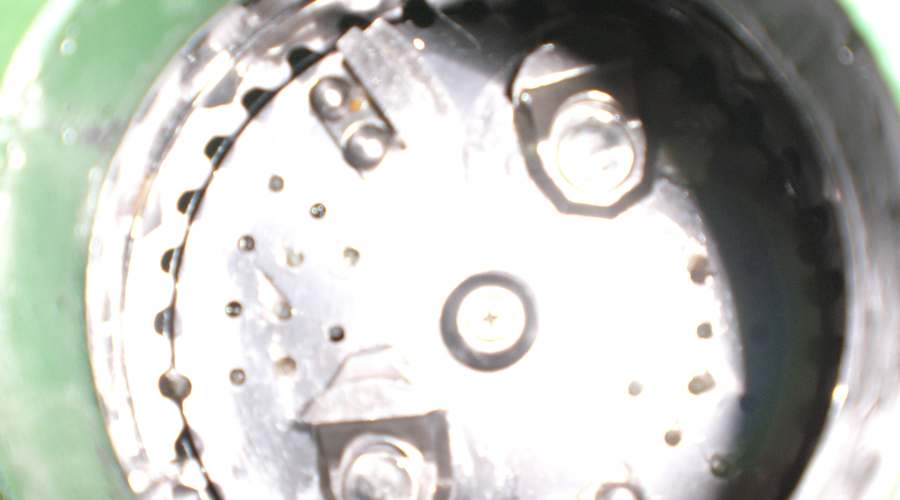
You flip the switch and the disposal just hums. Or it makes no sound at all. Or you open the cabinet and find a puddle spreading under the sink. Garbage disposals are simple machines, and most of their failures come down to a handful of causes you can diagnose in a few minutes — several of which you can fix yourself with a hex wrench and a flashlight. Here’s how to tell what’s actually wrong, what’s safe to handle on your own, and when the disposal isn’t the real problem at all.
Before You Touch Anything: The Safety Rule
Never put your hand into a garbage disposal. Not with the switch off, not “just for a second,” not to grab something you can see.
Whenever you’re working on a disposal:
- Turn the wall switch off.
- Cut power at the circuit breaker — or unplug the unit under the cabinet if it’s plugged in.
- Use tongs or needle-nose pliers to remove anything from inside the chamber. Never your fingers.
Sharp grinding components, a motor that can restart, and a dark chamber you can’t see into are a bad combination. Two minutes at the breaker panel is worth it every time.
Problem 1: It Hums but Won’t Spin
This is the most common disposal complaint, and it’s usually the easiest fix. A hum means the motor is getting power but the grinding plate is jammed — a bone, a fruit pit, a stray spoon, or a wad of stringy vegetable has locked it up.
Turn it off immediately. Every second you leave a jammed disposal running, you’re cooking the motor.
Then:
- Kill the power at the switch and the breaker.
- Look in the chamber with a flashlight. If you can see the culprit, pull it out with tongs.
- Find the hex wrench (Allen key) that came with the unit — it’s often clipped to the underside of the disposal, or you can buy a ¼-inch one at any hardware store. Insert it into the hex socket in the center of the bottom of the disposal.
- Work it back and forth, both directions, until the plate turns freely. That’s the jam breaking loose.
- Restore power and press the red reset button on the bottom of the unit.
- Run cold water and flip the switch. It should spin normally.
Problem 2: It’s Completely Dead
No hum, no click, nothing. Work through it in order — from cheapest to most expensive:
- Press the red reset button on the bottom of the disposal. A thermal overload trip is by far the most likely cause, especially if the unit was recently jammed or overworked. Let it cool a few minutes first.
- Check the circuit breaker. A disposal can trip the kitchen circuit; flip it fully off, then back on.
- Check that it’s plugged in, if yours plugs into an outlet under the sink. Cabinets get bumped.
- Test the wall switch. Switches wear out, and a dead switch imitates a dead disposal perfectly.
If reset, breaker, plug, and switch all check out and it’s still silent, the motor has likely failed. On a unit that’s more than about 10 years old, replacement is almost always the better value than repair.
Problem 3: It’s Leaking
Where the water shows up tells you what failed:
- Leaking from the top (at the sink). The sink flange seal has failed. The disposal can be dropped, the old plumber’s putty scraped off, fresh putty applied, and the flange re-seated. Very fixable.
- Leaking from the side. Usually a connection: the dishwasher hose clamp or the drain-line connection to the P-trap. Tighten the clamp or replace the gasket and it’s often solved.
- Leaking from the bottom of the unit. This one’s terminal. Water coming out of the body means the internal motor seals have failed, and there’s no repair for that. It’s time for a new disposal.
Don’t ignore a slow drip under the sink. In Houston’s humidity, a damp cabinet becomes a mold and rotted-baseboard problem faster than you’d think.
Problem 4: It Runs, but the Sink Won’t Drain
Here’s the important part: if the disposal spins freely and the sink still backs up, the disposal isn’t your problem — the drain line is.
The disposal grinds food into slurry and sends it into the same pipes as everything else. When those pipes are coated in years of grease, they stop carrying it away. This is extremely common in Houston kitchens, where grease from cooking congeals in the line and builds up until nothing gets through.
Try this first: fill the sink with a few inches of hot water, then plunge it with a flat sink plunger (block the other basin’s drain if you have a double sink). If it clears, great. If it backs up again in a week, you have a real buildup in the line and it needs to be professionally cleared. Our guides to a clogged kitchen sink and the most common causes of clogged drains in Houston homes walk through it in detail, and professional drain cleaning clears grease from the pipe wall in a way that no store-bought product does.
Skip the chemical drain cleaner. It rarely dissolves a grease clog, and it sits in your pipes doing damage — and in a disposal, it can corrode the metal components you’re trying to save.
Problem 5: It Smells
Odor comes from food residue stuck to the grinding chamber and the rubber splash guard.
- Grind a tray of ice cubes with cold water running — it scours the chamber walls.
- Follow with citrus peels (lemon, lime, or orange) for a clean smell.
- Scrub the underside of the rubber splash guard with an old toothbrush and dish soap. This is where most of the funk actually lives, and nobody ever cleans it.
- Always run cold water while grinding — cold keeps fats solid so they get chopped and flushed instead of smearing down the pipe wall as grease.
What Not to Put Down a Disposal
Most disposal repairs we see were preventable. Keep these out of it:
- Grease and cooking oil — the single worst offender. It goes down liquid and hardens into a wax lining inside your drain.
- Coffee grounds — pack together into sludge.
- Bones, fruit pits, and shells — the classic jam.
- Pasta and rice — swell with water and turn to paste.
- Fibrous vegetables — celery, corn husks, onion skins, artichokes, potato peels: the strings wrap the grinding plate.
- Anything not food — twist ties, bottle caps, silverware. Check the sink before you flip the switch.
And when you do use it: cold water on, feed food in gradually, let it run a few seconds after the grinding stops so everything clears the line.
How Hugo Plumbing Can Help
At Hugo Plumbing, we’ve been fixing and replacing Houston garbage disposals for over 20 years, and we’ll always tell you straight which one you need. A jam or a flange leak is a repair. A cracked body, a dead motor, or a 15-year-old unit that trips every other week is a replacement — and we’ll install a new one that fits your sink and your kitchen. And if it turns out the disposal is fine and it’s your drain line that’s packed with grease, we’ll clear it properly instead of selling you a machine you don’t need. Honest diagnosis, done right the first time.
Frequently Asked Questions
Why is my garbage disposal humming but not spinning? A hum with no spin means the motor has power but the grinding plate is jammed, usually by a bone, a fruit pit, a utensil, or a wad of fibrous food. Turn the disposal off immediately (running it while jammed will burn out the motor), cut the power at the switch and the breaker, and free the jam with the hex wrench in the bottom of the unit before pressing the red reset button.
Is it safe to put my hand in a garbage disposal? Never — not even with the power off at the switch. If you must reach in to remove an object, first shut the power off at the circuit breaker, then use tongs or pliers to pull the item out. The grinding components are sharp, and no clog is worth the risk. When in doubt, call a plumber.
What does the red reset button on my garbage disposal do? It’s a thermal overload switch. When the motor gets too hot or draws too much current, usually because it was jammed, the disposal shuts itself off to protect the motor. Once you clear the jam and let it cool for several minutes, press the red button on the bottom of the unit to reset it. If it trips again right away, something is still binding inside.
Why is my garbage disposal leaking? Where it leaks tells you what’s wrong. Water dripping from the top usually means a failed sink flange seal. A leak at the side is often a loose dishwasher hose or drain-line connection. Water coming from the bottom of the unit means the internal seals have failed. At that point the disposal can’t be repaired and needs to be replaced.
What should I never put down a garbage disposal? Grease and cooking oil (they solidify in the drain line), coffee grounds, eggshells, bones, fruit pits, pasta and rice (they swell), and fibrous foods like celery, corn husks, onion skins, and potato peels. In Houston, grease is the biggest offender. It congeals in the pipes and builds the kind of clog that eventually needs a professional to clear.
Know When It’s the Disposal — and When It Isn’t
Call or text (713) 409-7176 for a free estimate and a written price.
Most disposal trouble is a jam, a tripped reset, or a seal that gave out, and a careful homeowner with the power off at the breaker can handle a good share of it. But a unit leaking from its body is done, a motor that won’t hum is done, and a sink that won’t drain even when the disposal spins freely is telling you the real problem is further down the pipe. When you’d rather have it diagnosed and handled right, Hugo Plumbing has served Houston homeowners for over 20 years. If your drain won’t go, call Hugo.
Explore Our Plumbing Services
See all plumbing services, the areas we serve, or more plumbing tips.